
Gamma · 30–100 Hz
- InsightHow the brain binds a solution
- DecisionsJudgement under load
- Deep workThe conditions it needs
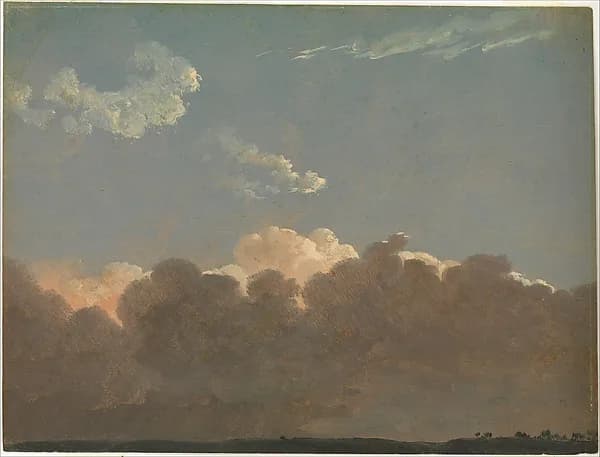
Cloud Study: Distant Storm, Simon Denis, ca. 1786–1806The Met, CC0
- Learn
- Practise
- Keep
Insight & decision-making workshop
Precision Thinking
Insight needs conditions. Protect them.
Precision Thinking is for people whose work is deciding and inventing. It covers how the brain binds information into insight, what cognitive load does to judgement, what deep work requires and how to sustain performance without burnout.
Faster, smallerSlower, larger






















Who it is for
For people paid to decide and to invent.
Founders, senior leaders, product and research teams. People whose best work is a judgement or an idea, and whose calendars give them the least room to produce either.
- Founders and leadership teams making consequential decisions
- Product, research and creative teams paid for ideas
- High performers who want the output without the burnout
Gamma · 30–100 Hz
The brain prepares an insight
before it feels sudden.
Insight feels sudden. Recordings show preparation, an impasse, a quiet period and a burst of activity before the answer arrives. The session teaches that sequence and the conditions it needs.
- 01
Prepare
Load the problem: the facts, the constraints, what has been tried.
NeedsFocused time
- 02
Impasse
The analytic route stalls. That is a normal stage.
NeedsPermission to stop
- 03
Incubate
Attention moves elsewhere while the problem restructures.
NeedsA walk or a night’s sleep
- 04
Insight
The solution arrives whole, with a gamma burst about 0.3 s ahead of it.
NeedsQuiet rather than pressure
- 05
Verify
Check the answer analytically before acting on it.
NeedsTime before the decision
The marked stage carries the gamma signature recorded in the laboratory: a burst over the right anterior superior temporal gyrus about 0.3 s before the solution. The stages around it are the ones a calendar controls, which is why the session spends most of its time there.
The evidence
Open a finding to read what was measured, where it stops and where it was published.
Insight has a signature
Jung-Beeman M et al. (2004)Recording EEG and fMRI while people solved word puzzles, Jung-Beeman and colleagues found a burst of gamma-band activity over the right anterior superior temporal gyrus beginning about 0.3 seconds before solutions reached by insight, and not before solutions reached by analysis.
LimitShort verbal puzzles in a laboratory. The signature marks insight; it does not make gamma a dial anyone can turn.
Sleep more than doubles insight
Wagner U et al. (2004)In a task with a hidden rule, more than twice as many participants discovered the rule after a night of sleep as after the same time spent awake.
LimitOne task, one night, in a laboratory. It is evidence that sleep restructures memory, not a promise about any particular decision.
Gamma binds distant regions
Fries P (2005)Fries proposes that groups of neurons communicate when their rhythms align, with gamma-band synchronisation a mechanism for binding activity across regions into one representation.
LimitA mechanistic hypothesis with support from animal and human recordings. It explains the band's reputation; it is not a workshop outcome.
SourceFries P (2005), Trends in Cognitive Sciences 9(10): 474–480
Two routes to a solution
Kounios J, Beeman M (2014)Kounios and Beeman review two decades of work showing that insight and analytic problem solving differ in their neural and cognitive signatures, and that attention, mood and resting brain state before a problem predict which route a person takes.
LimitLaboratory puzzles rather than boardroom decisions. The session is explicit about that distance.
SourceKounios J, Beeman M (2014), Annual Review of Psychology 65: 71–93
Gamma is the fastest rhythm the cortex produces and is present in ordinary perception as well as insight. The band names the workshop. No frequency makes a decision better, and this is not executive coaching.
What the session covers
Four topics from the catalogue, each with an exercise on the team's own decisions and calendar.
- 01
How the brain binds information into insight
In the roomWork a real problem through the insight cycle, from preparation to verification, and notice which stage a full calendar removes.
- 02
Decision-making under cognitive load
In the roomMake the same decision twice, once loaded and once with the load written out, and compare the reasoning the team put on paper.
- 03
The conditions deep work actually requires
In the roomList the conditions the evidence supports, then audit one real week against them.
- 04
High performance without the burnout tax
In the roomAgree the recovery that sustained performance depends on, with the sleep and insight evidence on the table.
Formats
Precision Thinking runs as a keynote on its own or shares a half or full day with another theme.
Keynote
One theme
A keynote brings the science, the stories and the practical tools to a conference stage or a town hall.
Half-day workshop
One or two themes
A half-day makes time to practise, and it is the format most teams start with.
Full-day training
Several themes
A full day works through exercises with your team's real cases on the table.
Every format runs both ways. Online sessions are designed for a remote audience, not compressed from the live version. Share your headcount and we will recommend a format. Compare the formats
What you keep
A model of insight you can plan around
The cycle from preparation to verification, and the condition each stage needs, so incubation time stops looking like idleness.
Decision hygiene under load
Habits for writing out, sequencing and resting before consequential decisions, rehearsed on a live case.
Conditions for deep work the team will defend
An agreed list of what deep work needs in this organisation, and one change to protect it.
Pairs well with
Questions
About this workshop
The questions teams ask about Precision Thinking before they book. Questions about workshops in general are answered on the catalogue page.
Is Precision Thinking an executive coaching programme?
No. It is a neuroscience workshop: the evidence on insight, decision-making under load and the conditions deep work needs, taught to a group with their real problems on the table. There is no individual coaching or assessment.
Who should be in the room?
People whose work is deciding and inventing: founders, leadership teams, product and research groups. Mixed seniority works well, because the conditions for insight are usually set by senior people and lived by everyone else.
Will this make our decisions better?
We make no such promise. The session gives a team an accurate model of how insight and judgement work and the conditions that help, and it is honest about the distance between laboratory puzzles and a board decision.
How does it combine with other themes?
Most often with Cognitive Drive as a leadership day, or with Sleep Science, because sleep is the incubation stage a calendar never schedules.
Your next step
Bring Precision Thinking
to your team.
Enquire about this workshop Tell us about your team, the format and the date you have in mind. The form opens with this workshop already named.